
Have you ever looked at your smile in the mirror and noticed that your upper front teeth extend noticeably over your lower teeth? You might have an overbite. While a slight overlap between the upper and lower front teeth is completely normal, a deeper-than-usual overbite can sometimes affect your bite, comfort, and overall oral health.
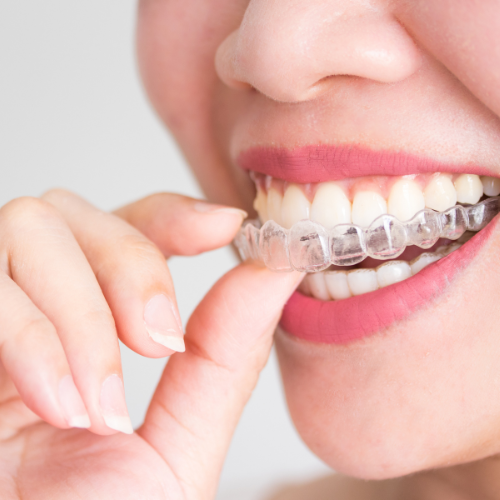
The good news is that modern orthodontic treatments offer several ways to address this concern. One option many patients ask about is Invisalign, which uses clear, removable aligners to gradually move teeth into better positions.
But what actually causes an overbite? And can Invisalign correct it without traditional braces? Let’s take a closer look at what you should know before considering treatment.
What Is an Overbite?
An overbite refers to the vertical overlap of your upper front teeth over your lower front teeth when you close your mouth. A small amount of overlap is normal and helps your teeth function properly when biting and chewing.
However, when the upper teeth cover too much of the lower teeth, it may be considered a deep overbite. In some cases, the lower front teeth may even touch the roof of the mouth, potentially causing irritation or tissue damage.
An overbite is different from an overjet. An overjet occurs when the upper front teeth extend too far forward horizontally beyond the lower teeth.
Although these bite concerns can occur together, they don’t mean exactly the same thing. A dental examination is the best way to understand your specific bite alignment.
What Causes an Overbite?
Overbites can develop for several reasons. Sometimes, they’re related to genetics, while other times, childhood habits or jaw development play a role.
Here are some common contributing factors:
1. Genetics and Jaw Structure
Genetics can influence the size, shape, and positioning of your jaws and teeth. If one jaw is smaller or positioned differently from the other, the upper front teeth may overlap the lower teeth more than usual.
This is one reason overbites can run in families.
2. Thumb Sucking During Childhood
Thumb sucking is common among young children, but prolonged habits can affect how the teeth and jaws develop.
When a child continues thumb sucking beyond the early developmental years, repeated pressure on the front teeth may contribute to changes in tooth positioning and bite alignment.
3. Prolonged Pacifier Use
Similar to thumb sucking, extended pacifier use may influence the development of a child’s bite. The amount of pressure, frequency, and duration of the habit can all play a role.
4. Tongue Thrusting
Tongue thrusting occurs when the tongue pushes forward against the front teeth during swallowing or at rest. Over time, this habit may contribute to changes in tooth positioning and bite alignment.
5. Missing or Crowded Teeth
Tooth loss, crowding, and other alignment issues can affect how your upper and lower teeth come together. These changes may contribute to bite problems or make an existing overbite more noticeable.
Can an Overbite Cause Dental Problems?
Not every overbite needs treatment. A mild overbite may not cause noticeable problems, but a more pronounced one can affect your oral health over time.
Depending on its severity, an untreated overbite may contribute to:
- Excessive tooth wear: Upper and lower teeth may experience uneven pressure during chewing.
- Gum irritation: Deep overbites can sometimes cause lower teeth to contact the gum tissue behind the upper front teeth.
- Jaw discomfort: Certain bite problems may contribute to strain around the jaw muscles or temporomandibular joints.
- Difficulty chewing: Significant misalignment can make biting and chewing less comfortable.
- Changes in appearance: A pronounced overbite may affect the appearance of your smile and facial profile.
If you’re noticing these concerns, an orthodontic evaluation can help determine whether treatment is appropriate.
Can Invisalign Correct an Overbite?
Yes! Invisalign aligner can correct many mild to moderate overbites, depending on what’s causing the problem and how your teeth and jaws are positioned.
Invisalign uses a series of custom-made clear aligners designed to apply controlled pressure to specific teeth. As you progress through the aligner series, your teeth gradually move toward their planned positions.
For overbite correction, treatment may involve moving certain teeth, adjusting their angles, and improving how the upper and lower arches fit together.
Some patients may also need small tooth-colored attachments to help the aligners grip and move teeth more effectively. In selected cases, additional orthodontic techniques may be recommended.
However, Invisalign isn’t the right solution for every overbite. Severe skeletal discrepancies involving the jaw bones may require more comprehensive orthodontic treatment, and occasionally, a combination of orthodontics and jaw surgery.
How Does Invisalign Treatment Work for Overbite Correction?
If you’re considering clear aligners, here’s what the treatment process generally looks like.
Step 1: Initial Consultation
Your dentist evaluates your teeth, bite, and jaw alignment. Digital scans, photographs, and dental X-rays may be used to understand the underlying problem.
At Dental Arts of Huntley, visit our dental office located at 9920 IL-47, Huntley, IL 60142, to discuss your smile concerns and explore whether Invisalign may be appropriate for your needs.
Step 2: Customized Treatment Planning
If you’re a suitable candidate, a digital treatment plan is created to map out the expected tooth movements. This helps determine how your overbite may improve throughout treatment.
Step 3: Wearing Your Clear Aligners
You’ll receive a series of custom aligners that need to be worn for approximately 20–22 hours each day, removing them only for eating, drinking anything other than water, brushing, and flossing.
Step 4: Progress Checks
You’ll have periodic dental appointments to monitor tooth movement and make sure your treatment is progressing as planned. Some patients may need additional aligners, known as refinements, to achieve their desired results.
Invisalign vs. Traditional Braces: Which Is Better for an Overbite?
Both Invisalign and traditional braces can help correct overbites, but the right choice depends on your individual orthodontic needs.
- Invisalign: Clear, removable aligners that are discreet and convenient for eating and cleaning your teeth. They require consistent daily wear.
- Traditional braces: Fixed brackets and wires that provide continuous control over tooth movement and can be suitable for more complex alignment problems.
Invisalign offers flexibility, while braces may provide better control for certain complicated cases. Your dentist or orthodontist can recommend the option that best fits your bite and treatment goals.
Get Your Overbite Evaluated at Dental Arts of Huntley
An overbite may seem like a small cosmetic concern, but in some cases, it can affect how your teeth function and how comfortable your bite feels.
The good news is that several orthodontic options are available, and Invisalign may be an effective choice for many patients with mild to moderate overbites.
At Dental Arts of Huntley, Dr. Shobhit Bansal, DDS, FAGD, FICOI, can help evaluate your dental alignment and discuss treatment options based on your individual needs.
Contact Dental Arts of Huntley today to schedule an appointment and find out whether Invisalign can help improve your overbite and give you a healthier, more confident smile.